
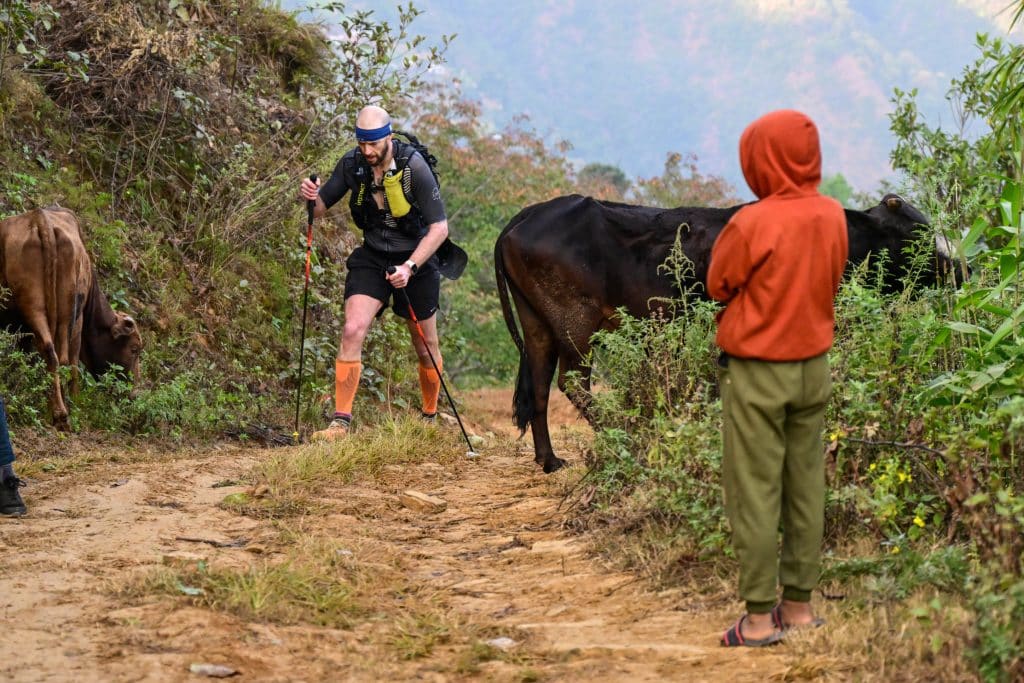
Searching for physical challenge holidays abroad usually means you’ve already ruled out the standard resort holiday. You want something that tests you — physically and mentally — in a setting that makes the effort worthwhile. But not all “challenge” holidays are built the same way, and knowing what separates a well-designed event from a poorly supported one can be the difference between the trip of a lifetime and a genuinely miserable week. Here’s what to weigh up, using our own Nepal Ultra Marathon as a working example.
Terrain and Distance Should Match Your Goals
The first thing to look at with any physical challenge holiday abroad is exactly what you’re being asked to do. Vague marketing around “epic adventure” or “life-changing challenge” isn’t enough — you need concrete detail on distance, terrain, and daily structure.
Our Capital to Country event is explicit about this: roughly 120 miles over five days of trekking, starting at Sankhu in the Kathmandu valley and finishing at Lama Village, across a mix of roads, jeep tracks, and challenging off-road paths. That’s the kind of detail that lets you honestly assess whether a challenge suits your current fitness and what training you’ll need to do beforehand.
Support Infrastructure Matters More Than People Expect
A physical challenge abroad is a fundamentally different proposition from one at home. You’re dealing with unfamiliar terrain, different food and water, altitude in many cases, and the logistics of getting injured or unwell far from home comfort. This is where the quality of the organising team makes or breaks the experience.
Look for events that provide genuine ground support throughout — not just at the start and finish line. Our event includes general ground assistance during the race, campsites with shared tents, bottled water for the duration, hot water for meal preparation, local medical assistance if required, and a tracker for every participant. An experienced local race management team, who know the terrain intimately, oversee the entire route. These aren’t luxuries; for a multi-day physical challenge abroad, they’re the baseline of what should be in place before you sign up.
Accessibility Without Losing the Challenge
There’s a common misconception that physical challenge holidays are only for elite athletes. Some are. Plenty of others — including ours — are deliberately structured to be demanding but achievable, with a walk, jog, or run approach that lets participants complete the route at a pace suited to their own fitness and experience.
This distinction matters when you’re comparing options. If you’re newer to endurance challenges, look specifically for events that state clearly they’re not timed races against the clock, and that provide the support structure (campsites, medical cover, ground assistance) to make a slower pace genuinely viable rather than just a footnote in the marketing copy.
What’s Actually Included — Read the Fine Print
Physical challenge holidays abroad often advertise an all-in price that doesn’t actually cover everything. Before booking any event, get a clear breakdown of what’s included and what isn’t.
For our event, the price (£375 deposit plus staged payments totalling £1,775) covers accommodation, ground transfers, permits and entry fees, campsite support, local medical assistance, a finisher’s trophy, professional photos, and event meals including a farewell dinner in Kathmandu. It does not cover flights, race-day food, running equipment, medical or cancellation insurance, spending money, or your tourist visa. Knowing this breakdown in advance lets you budget properly and avoid surprises once you’ve already committed.
The Cultural Dimension Shouldn’t Be an Afterthought
The best physical challenge holidays abroad don’t treat the challenge and the destination as separate things bolted together. They integrate the two. A visit to the Monkey Temple (Swayambhunath) in Kathmandu, a traditional Nepalese celebration cooked by villagers at the end of the trek, and a monk’s blessing of the mountain and runners on the morning of the final stage — these moments connect the physical effort directly to the place and culture you’re moving through. If a challenge holiday abroad reads purely as a sporting logistics document with no cultural context, that’s worth noting before you book.
Sustainability and Local Impact
It’s increasingly worth asking how a challenge event abroad affects the communities it passes through. Our approach — travelling with a small UK team and minimal imported equipment, while sourcing food, staffing, and campsite support locally — is a deliberate choice to keep economic benefit within Nepal. When comparing physical challenge holidays, this is a fair question to ask any operator: how much of your money stays in the country you’re visiting?
Timing Your Booking
Multi-day challenge events abroad generally run to fixed annual dates, and 2026’s Capital to Country event runs from 22nd to 29th November. Fixed dates mean fixed lead times for training, visas, insurance, and flights — so the earlier you commit, the more comfortably you can prepare.
Making the Right Choice
If you’re evaluating physical challenge holidays abroad, prioritise clarity: clear terrain and distance information, genuine on-the-ground support, an honest breakdown of what’s included, and a real connection to the place you’re visiting. The Nepal Ultra Marathon is built around exactly those principles.
Get in touch with our team with any questions, or register your interest for 2026 or 2027 to start planning your own challenge.